

Context
and
Background


Understanding the historical, cultural, and literary context of The Picture of Dorian Gray provides essential insight into Wilde's intentions and the novel’s deeper meanings.





Victorian England:
A World of Contrasts

-
The novel was published in 1890, during the late Victorian era, a period marked by strict moral codes, social hierarchy, and rapid industrialization.
-
Queen Victoria’s reign (1837–1901) was known for its public emphasis on virtue, piety, modesty, and sexual restraint—especially for women.
-
Despite these values, the era was rife with hypocrisy: behind the façade of moral respectability, issues like prostitution, substance abuse, poverty, and repressed sexuality thrived.
The Victorian era was named after Queen Victoria, who reigned from 20 June 1837 until her death on 22 January 1901.
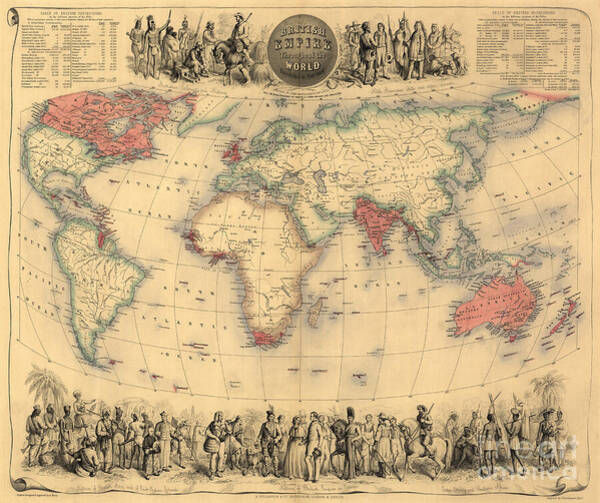
The British Empire was a massive empire that spanned the globe, making Britain the world's economic and military powerhouse.
-
Medical breakthroughs were made with the identification of cholera, small pox, tuberculosis and typhoid fever.
-
Scientific inventions like steam ships, steam trains, spinning mills, bridges, radio transmissions, photography and electricity changed the world forever.
-
These innovations laid the foundation for a new era: The Industrial Revolution.
-
People flocked to the city to feed the ever increasing need for workers.
-
The Industrial Revolution transformed society from a rural to an urban civilization.
-
The Great Exhibition portrayed Britain as the world's dominant force at the time.
-
The rapidly changing society brought with it an even bigger gap between the classes in Britain.
-
One of the defining characteristics of the time was the rigid class structure and the “rules” that defined the different classes in society.
-
They were:

The British Empire and Class Divide
-
At its peak, the British Empire controlled vast global territories, and Victorian England saw itself as morally superior and culturally enlightened.
-
However, economic disparity within the country was severe. The upper class lived in luxury, while the working class endured overcrowded slums, factory labor, and little access to education.
-
Wilde satirizes this divide through Dorian’s contrasting experiences in the lavish West End and the squalid East End.
These classes have existed in since the Middle Ages. They still exist in Britain today.
Upper Class

-
People were exempt from working.
-
Wealth was derived through inherited property or investments.
-
Included members of the clergy and nobility.
-
Characters in the novel: Dorian Gray. Lord Henry Wotton
Middle Class

-
Did the “clean work”.
-
Only men generated income.
-
Consisted of bankers, shopkeepers, merchants, engineers, and other professionals who had aspirations for upward mobility and usually adhered to upper-class social norms.
-
Preoccupied with outward appearances and perceptions.
Working Class

-
Working-class living and working conditions were deplorable.
-
Frequently overcrowded.
-
Inadequate ventilation.
-
There were no sewage or drainage systems.
-
Women and children were among those who worked.
-
Long working hours.
-
Nutrition and health problems.
-
Courtship rules were not followed.
-
Did not partake in social activities.
-
Had extremely few educational opportunities.
Oscar Wilde and the Aesthetic Movement

-
Wilde was a leading figure in the Aesthetic Movement, which championed the idea of "art for art’s sake."
-
This philosophy rejected the notion that art must serve a moral or political purpose. Instead, beauty and sensual experience were elevated above ethical or utilitarian concerns.
-
Wilde uses the novel to dramatize and question the limits and dangers of aestheticism, especially when removed from moral responsibility.

Decadence and French Influence
-
The novel is steeped in decadent literature, influenced by French writers like Joris-Karl Huysmans, whose novel À rebours (referred to as the "yellow book" in Dorian Gray) celebrates excess, artifice, and sensual indulgence.
-
Wilde places Dorian in this tradition, using his downfall to explore the corrupting influence of aestheticism when taken to the extreme.
-
See Chapter 11.


Sexuality and Censorship
-
Wilde’s own life and sexual identity are deeply relevant. As a gay man in a time when homosexuality was illegal, Wilde encoded homoerotic subtext into his characters' relationships, especially between Basil Hallward and Dorian.
-
The novel was heavily criticized and censored on publication. Critics labeled it “immoral,” and Wilde later added a Preface defending the artist’s right to be amoral in his work.
Oscar Wilde's critique of Victorian Morality
Oscar Wilde critiques Victorian morality in The Picture of Dorian Gray by exposing the hypocrisy, repression, and superficiality that characterized the moral standards of his era.
Exposing Moral Hypocrisy
-
Dorian Gray maintains a flawless public image in elite Victorian society while secretly living a corrupt, immoral life. This duality reflects the era’s obsession with appearances over inner virtue.
-
Wilde criticizes the double standard—where reputation and social standing mattered more than true morality—by showing that Dorian is celebrated for his charm and beauty, even as he commits terrible acts in private.
Hedonism vs. Moral Duty
-
Through Lord Henry, Wilde introduces a philosophy of aestheticism and hedonism: the pursuit of beauty and pleasure above all else.
-
Lord Henry’s seductive aphorisms challenge Victorian values of self-restraint and Christian morality, encouraging Dorian to live for sensation rather than conscience.
-
Dorian’s downfall shows the dangers of this unchecked hedonism—but Wilde leaves open the question of whether Victorian repression is the greater evil.
Repression and the Consequences of Denial
-
Victorian society was notoriously repressive about sexuality, desire, and identity. Wilde uses the painting as a metaphor for Dorian’s repressed guilt and hidden sins.
-
The supernatural portrait that absorbs the weight of Dorian's actions reflects how society encouraged people to hide their sins rather than confront or correct them.
-
Dorian becomes a cautionary symbol of what happens when a person cannot reconcile their true self with societal expectations.
Satire of Victorian Social Norms
-
The novel satirizes polite society through Lord Henry’s witty, often outrageous remarks about marriage, morality, women, and philanthropy.
-
Wilde suggests that much of Victorian morality was performative and empty, a set of roles people played rather than lived truths.
The Tragic Outcome
-
Dorian’s eventual destruction—triggered not by remorse, but by the unbearable weight of hiding his inner corruption—shows that denying one's true self (in accordance with society’s standards) is ultimately unsustainable.
-
The novel questions whether society’s moral expectations actually prevent vice, or simply drive it underground, making it more dangerous.
Wilde critiques Victorian morality by revealing its contradictions: a culture that prized virtue but rewarded surface appearances, condemned pleasure but secretly indulged it, and demanded propriety while tolerating deceit.
key quotes:
Hypocrisy of Appearances
“You will always be fond of me. I represent to you all the sins you never had the courage to commit.”
— Lord Henry to Dorian
This line reflects how Victorian society vicariously admired sin from a safe moral distance, often admiring scandal as long as it remained hidden.
Morality as a Social Mask
“The only way to get rid of a temptation is to yield to it.”
— Lord Henry
This subversive aphorism inverts traditional Christian teachings, mocking the Victorian obsession with self-control and implying that repression causes more harm than indulgence.
The Corruption of Influence
“There is no such thing as a good influence, Mr. Gray. All influence is immoral—immoral from the scientific point of view.”
— Lord Henry
Here, Wilde undermines the Victorian value of moral mentorship, suggesting that influence distorts individuality, and that Victorian socialization is itself a corrupting force.
Surface vs. Soul
“If it were I who was to be always young, and the picture that was to grow old!... I would give my soul for that!”
— Dorian Gray
Dorian’s Faustian wish is a metaphor for Victorian society’s obsession with youth, beauty, and status, placing external virtue above internal integrity.
Repression of Desire
“Each of us has Heaven and Hell in him, Basil...”
— Dorian Gray
This moment shows Dorian’s inner conflict—his outward grace hides a tormented conscience, a direct critique of how Victorian norms force individuals to suppress natural impulses instead of understanding or integrating them.
The Immorality of Artifice
“Being natural is simply a pose, and the most irritating pose I know.”
— Lord Henry
Wilde mocks the Victorian ideal of “natural virtue,” exposing how much of moral behaviour was theatrical—a performance to maintain reputation, not genuine ethical conviction.
Critique of Philanthropy and "Virtue"
“Philanthropic people lose all sense of humanity. It is their distinguishing characteristic.”
— Lord Henry
This ridicules the moral superiority of the Victorian upper classes, many of whom engaged in charity while ignoring the systemic causes of poverty they helped sustain.
The Consequences of Repression
“He grew more and more enamoured of his own beauty, more and more interested in the corruption of his own soul.”
— The Author on Dorian
This chilling line encapsulates Wilde’s vision: when morality is externalized—seen only in others’ eyes or in a portrait—inner morality dies, and self-obsession takes its place.
Milieu
The people, geographical and social conditions, and events that constitute the setting for a novel.

This work is set during the late-nineteenth-century Decadent Artistic Movement, making Dorian a contemporary of his author, Oscar Wilde.
The influence of French Decadent literature can be traced throughout the narrative, from the Gautier poem reported in Chapter 14 to the ostentatious, foppishly rich style of Dorian's attire and surroundings.
Although Wilde never offers a definite date for Dorian Gray, the existence of the yellow book—a veiled version of A Rebours by J. K. Huysmans—means that Dorian must have lived after the book's release in 1884.
Surprisingly, the Decadent movement occurred within the context of the Victorian era, which is best known for its prudish, priggish social mores and overly judgmental standards.
Wilde's novel is all the more audacious because of the contrast between humdrum middle-class society and the misdeeds of the wealthy and corrupt upper classes. Dorian wanders freely between the opulent West End and the run-down East End of London.

Dorian makes his home in the West End, especially in the opulent Mayfair sector, and frequents numerous gentlemen's clubs, theatres, and symphony halls.
In the East End, near the port, the disguised Dorian steals into disgusting saloons-turned-opium-dens for an occasional high, and disgustingly brushes elbows with the numerous underworld characters whose lives he's destroyed.

Dorian's two sides are represented by the two settings.
He is the gallant gentleman, trendy trendsetter, intellectual aristocrat, and scandalous local celebrity in the West End. To satisfy his discerning palate, he likes the best art forms society has to offer: opera, theatre, painting, and French cuisine.
In the East End, however, he transforms into a frightening, skulking, unmistakably malevolent spectre (the "devil's bargain"), just as anxious for an opium dose as the next guy and generally attempting to forget his criminal life in the city.
Wilde passionately constructs a duplicate setting for a duplicate life.
Gothic Revival in the Late 19th Century

What is the Gothic Literary Tradition? How is it still relevant today?
The Gothic literary tradition began in Europe in the mid-eighteenth century and continues in diverse forms around the world, including contemporary fiction, poetry, art, music, film, and television.
Mad scientists, burned heaths, abandoned ruins, enigmatic ghosts, attractive vampires, and even small green men populate its stories. Gothic works, with ingredients such as a highly developed sense of atmosphere, extreme emotions such as fear and awe, and emphases on the mysterious and paranormal, tend to express anxieties about social, political, religious, and economic issues of the time, as well as rejection of prevailing modes of thought and behaviour.
Unusual settings, such as castles, dungeons, prisons, and cemeteries, are common motifs and characters.
Gothic Novels
-
The paranormal...
-
Monsters…
-
Doppelgängers…
-
Objects of Magic...
-
Femme fatale...
-
Demons…
-
Walking skeletons…
-
The devil...
-
Witchcraft and witches...
-
Science is being abused...

The Picture of Dorian Gray as a Gothic Novel.
When Oscar Wilde penned The Picture of Dorian Gray in the late nineteenth century, the golden age of Gothic fiction had already passed.

It was a strange resurgence of the Gothic, which is commonly referred to as the "Gothic revival," with other renowned works of literature from this century including R. L. Stephenson's The Strange Case of Dr. Jekyll and Mr. Hyde (1886) and Bram Stoker's Dracula (1897).
In addition, Oscar Wilde is thought to have modelled The Picture of Dorian Gray on Maturin's Melmoth the Wanderer, one of the most well-known Gothic novels.

Lord Henry Wotton's impersonation of the devil becomes clear early on.
Lord Henry, a nasty, malicious man who frequently utters aphorisms, using his wisdom to entice and corrupt Dorian with his new hedonism and immoral views.
Lord Henry also offers Dorian the toxic "Yellow Book," which intrigues and inspires him so much that he loses his "natural" purity and becomes a murderer.
Lord Henry Wotton's name is an aptronym*: he is frequently referred to as "Harry," and "old Harry" is a synonym for the devil.
* Aptronym: a person's name that is regarded as amusingly appropriate to their occupation.
The Devil

The Atmosphere

The novel's most striking device, the terrifying atmosphere, is created multiple times throughout. One of these scenarios is when Dorian shows Basil the room where the painting is hidden:
"They walked softly, as men do instinctively at night. The lamp cast fantastic shadows on the wall and staircase. A rising wind made some of the windows rattle."
A second scene that conveys this mood is Dorian's attempt to visit the opium den:
"A cold rain began to fall, and the blurred street-lamps looked ghastly in the dripping mist. The public-houses were just closing, and dim men and women were clustering in broken groups round their doors. From some of the bars came the sound of a horrible laughter. In others drunkards brawled and screamed. "
The Bargain with the devil

The most famous instance of a character selling their soul to the devil is undoubtedly found in Goethe's Faust. Dorian, unlike Faust, does not redeem himself.
Dorian unwittingly sells his soul in the opening chapter, when he exclaims, "I would give my soul" for the opportunity of being young for the rest of his life.
He wants to be forgiven and live a normal life again, but he fails and eventually pays his penalty.
The secret room

Oscar Wilde seemed to be fascinated by the old schoolroom mentioned in Chapter 10.
When Dorian Gray was a child, the schoolroom served as both a study and a playroom, and it was always locked. But now that Dorian needs a new location to hide the picture and hide the fact that he sold his soul, he reopens it.
Oscar Wilde's description has all of the elements found in Gothic novels: Old books, rats, faded tapestries, creaking windows in the wind, and a mildew odour.
The topic of securing something arises frequently in Gothic fiction, frequently in relation to castles. In this case, the room is utilized to store the painting.
A secret room to keep a secret!
The supernatural

There is no logical explanation for why the picture ages and changes but Dorian does not. The supernatural element is what holds the plot together.
The most supernatural point in the narrative occurs at the end, when Dorian dies and his dead corpse is old and wrinkled, and the picture mysteriously returns to its original state.
The doppelgänger-motif

As a result of the scientific assumption that every human being has an inner duality, the concept of the doppelgänger appears frequently in Gothic literature.
The doppelgänger motif does not occur in its original form in Dorian Gray. However, the spell cast on Dorian and the picture are reminiscent of the doppelgänger motif.
On the one hand, there is Dorian’s external look, which remains unchanged for eighteen years, and on the other, there is Basil's wonderful painting, which varies in accordance with Dorian Gray's character.
Oscar Wilde presumably uses this theme to demonstrate that beneath every beautiful object might be something wicked, and that one should never trust the superficial appearance of something.
The unexpected
outbreak of violence

Suddenly and unexpectedly, horror and violence erupt:
When Dorian shows Basil Hallward the altered picture, Dorian feels a sudden wave of loathing for Basil: :"The mad passion of a hunted animal stirred within him, and he loathed the man [...] more than in his whole life he had ever loathed anything.”
The procedure of Dorian killing the painter is detailed: " Something began to trickle on the floor.," and Dorian's sick and unexplained lack of sentiments while murdering the artist is genuinely horrifying.
"Bad" science

When The Picture of Dorian Gray was published, science was still depicted as something dark and sinister in Gothic literature, despite the fact that the Enlightenment had already left its mark on society and the desire to genuinely know was gradually growing larger than believing in the teachings of the Church.
The science subject appears twice in The Picture of Dorian Gray.
To begin, when Dorian blackmails Alan Campbell (an old friend of his who is a scientist) into dissolving Basil's dead body (chapter 14), Campbell's equipment is stated as follows:
"...the servant entered, carrying a large mahogany chest of chemicals, with a long coil of steel and platinum wire and two rather curiously-shaped iron clamps. He heard Campbell bringing in the heavy chest, and the irons, and the other things that he had required for his dreadful work. "
The descriptions of Campbell's chemicals and gadgets are definitely not favourable; they even remind us of torture devices and wicked machines from earlier Gothic tales.

The science motif can also be found in Lord Henry Wotton's interaction with Dorian Gray.
Lord Henry appears to regard Dorian as a test subject. This could be based on these excerpts:
“…and certainly Dorian Gray was a subject made to his hand, and seemed to promise rich and fruitful results.”
“I hope that Dorian will make this girl his wife, [...] and then suddenly become fascinated by some one else. He would be a wonderful study.”
Lord Henry Wotton enjoys "vivisecting" people and does not respect their humanity and all of these incidents demonstrate how Lord Henry simply exploits Dorian for his own purposes.
Magical objects and complete devotion to things

The yellow book ,which is claimed to be "A Rebours" by French novelist Joris-Karl Huysman, Lord Henry delivers to Dorian Gray in chapter 10 absolutely captivated Dorian, he himself states that he "forgot how the time was going".
The book allows " all sins of the world pass in dumb show before him," and he cannot release himself from the grasp of the book, or, worse, he does not even attempt to.
Books, to be sure, can be captivating, but not to the same extent as the “yellow book” in the novel.
Furthermore, the “yellow book” represents another stage in Dorian's transition into a murderer with no remorse.